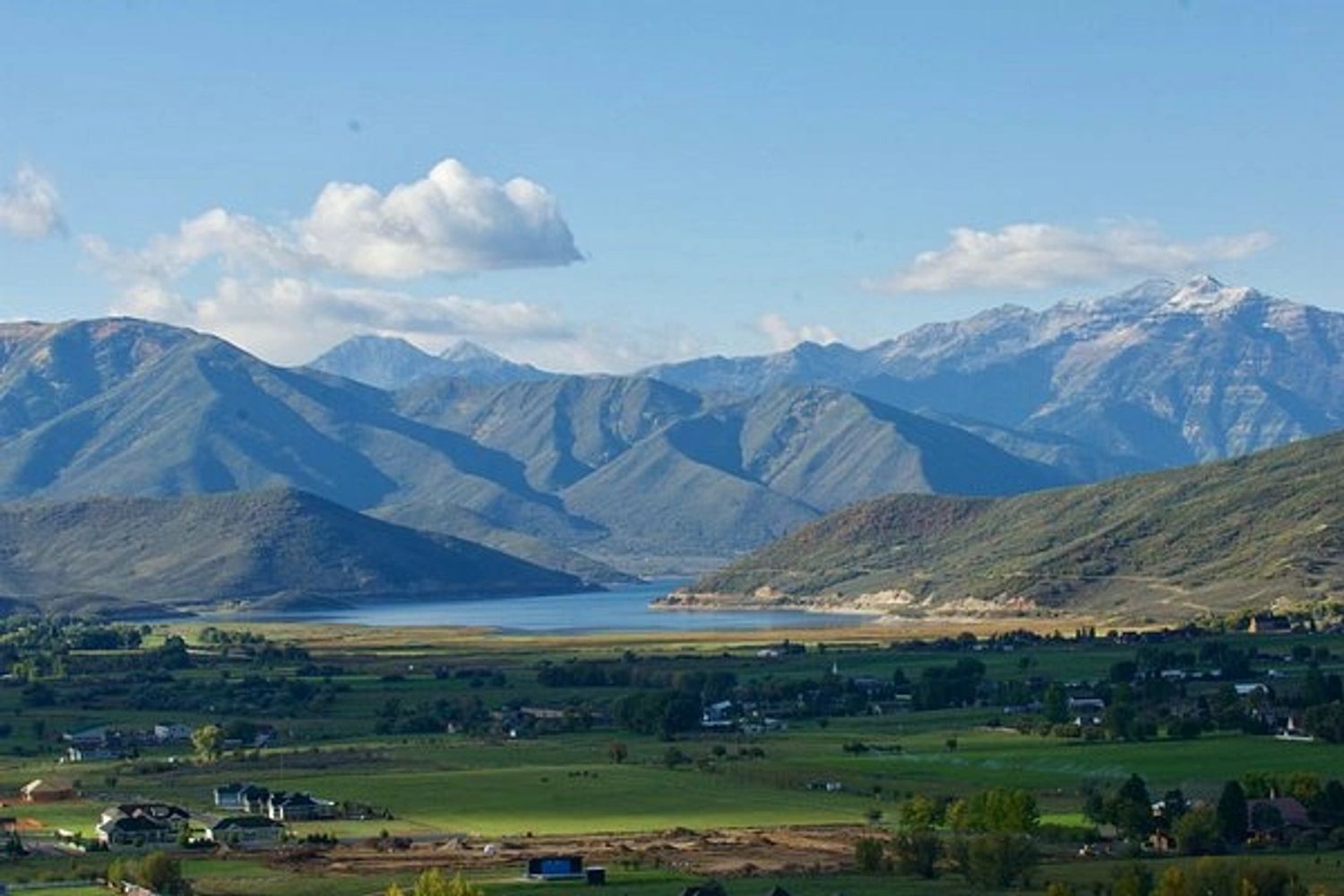
Protecting Heber Valley's Water Resources
Join us in safeguarding our precious aquifer for future generations.
Join us in safeguarding our precious aquifer for future generations.

Heber Valley Aquifer Alliance (HVAA) is a volunteer-led,
nonprofit advocacy and educational organization dedicated to protecting the long-term health, sustainability and safety
of the Heber Valley aquifer.
We work to ensure that groundwater—the community’s primary and most vulnerable water source—is managed wisely, transparently and with the future of Heber Valley in mind. We review scientific research, produce public education materials
and advocate for responsible land-use.

The Heber Valley aquifer is the lifeblood of our community—supplying thousands of residents with clean, reliable drinking water. Yet rapid commercial development, high-volume groundwater pumping and insufficient long-term planning are placing increased pressure on this fragile and finite resource.

The Heber Valley Utah Temple is an important and meaningful project for many in our community. Its construction involves significant site preparation in an area underlain by a shared aquifer that supports local wells, streams and long-term water supply.
The HVAA authored an environmental impact report to better understand the hydrologic conditions and potential environmental considerations associated with construction dewatering — not to oppose the temple, but to encourage transparency, sound science and responsible stewardship for the benefit of the entire Heber Valley community.
Heber City Municipal Wells Drawdown
This report finds that long-term pumping at the temple site — totaling hundreds of millions of gallons each year — is enough to noticeably lower groundwater levels in nearby areas. The Hospital Well, located less than half a mile away, is especially vulnerable. Even moderate pumping could lower water levels by 5 to 20 feet, putting at risk one of Heber City’s most important drinking-water sources.
The Broadhead Well and Broadhead Spring Well, which also supply water to the city, are similarly at risk — particularly in late summer, when groundwater levels are already at their lowest. Continued drawdown could reduce the reliability of these wells at the very time the community needs them most.
Land Subsidence (Ground Sinking) in the Heart of Heber City
When groundwater levels are permanently lowered, underground clay and silt layers can slowly compress, causing the land surface above them to sink — a process known as land subsidence. Similar cases in Utah have shown that subsidence can affect hundreds of acres, damaging roads, underground pipes, building foundations, and other infrastructure.
In Heber City, three projected subsidence areas fall directly within the center of town, placing homes, businesses, streets, and utilities at risk. Once land sinks and underground storage capacity is lost, the damage cannot be reversed.
Loss of Old Growth Trees
The analysis identifies a high-risk zone of roughly 350 acres where groundwater levels would drop far enough that old-growth cottonwoods and willows would not survive. Beyond that, a larger stress zone of approximately 675 acres would experience long-term water shortages, leading to declining tree health, loss of shade, higher stream temperatures, and gradual ecosystem collapse.
In practical terms, the mature trees along and west of Mill Road and along Center Street are expected to die within five years if current plans move forward. These trees are living landmarks — some centuries old — that define the look and feel of Heber Valley. Once lost, they cannot be replaced within our lifetimes.
Download the full white paper to explore the data, scientific context and detailed analysis behind these findings — including recommended next steps for the U.S. Geological Survey to conduct a full and independent environmental impact study.

The proposed Slope development is a large, high-density residential and commercial project planned near the Provo River in Heber City. The site sits in a low-lying area where groundwater is naturally close to the surface and closely connected to the Heber Valley aquifer and nearby waterways.
Because groundwater is close to the surface at the site, construction is expected to require pumping water out of the ground to keep foundations and utilities dry. Residents have raised questions about how much water would be pumped, how long pumping would last, and where the water would be discharged, as well as concerns about sediment, water quality, and potential impacts to nearby ditches, wetlands, and the Provo River. Beyond construction, many citizens are also asking how the project could affect shared water resources over the long term, including groundwater levels, river flows, and overall water availability in a valley that already faces ongoing water constraints. While not opposed to development, residents are seeking transparency, enforceable safeguards, and independent monitoring to protect water resources for the broader community.
Lower Groundwater Levels
Sustained or repeated pumping can lower local groundwater levels. Over time, this may affect nearby wells, springs, and natural groundwater flows that support the valley’s water system.
Reduced Aquifer Recharge
Replacing open land with buildings, pavement, and roads reduces the amount of water that can naturally soak back into the ground. Less recharge means less water stored in the aquifer for future use.
Impacts to the Provo River and Connected Waterways
Groundwater and surface water are closely linked in this area. Changes to groundwater levels can reduce the water that feeds the river, wetlands, and nearby channels—especially during dry periods.
Water Quality and Sediment Risks
Construction and stormwater runoff can carry sediment into waterways if not carefully managed. Over the long term, changes in groundwater movement can also affect water quality.
Cumulative Impacts
While any single project may appear manageable, multiple large developments drawing from or altering the same aquifer can collectively strain the system. These cumulative impacts are difficult to reverse once they occur.
Permanent Changes
Some groundwater impacts—such as reduced storage capacity or altered flow paths—can be long-lasting or irreversible, affecting future generations’ access to clean, reliable water.
HVAA recognizes that Heber Valley will continue to grow. Our focus is not stopping development, but encouraging responsible planning and protections that safeguard water resources and the long-term health of the valley for current and future generations.
Download the full white paper to explore the data, scientific context and detailed analysis behind these findings — including recommended next steps for the U.S. Geological Survey to conduct a full and independent environmental impact study.

The Utah Department of Transportation (UDOT) is studying a proposed highway bypass around Heber City as part of a federal Environmental Impact Statement (EIS) process. The goal of the project is to reduce traffic congestion and improve transportation flow through the valley.
Several proposed routes cross open lands north and west of Heber City, areas that include shallow groundwater, wetlands, irrigation ditches, and natural recharge zones connected to the Heber Valley aquifer and the Provo River system. Because of this setting, water resources are a key focus of the environmental review. UDOT is required to study how construction and long-term operation of the bypass could affect groundwater, surface water, wetlands, and water quality, with opportunities for public review and comment as part of the EIS process.
Reduced Groundwater Recharge
Roads, bridges, and pavement prevent water from soaking into the ground. Building a major highway across open land can permanently reduce the amount of water that naturally recharges the aquifer.
Impacts to Wetlands and Shallow Groundwater
Some proposed routes cross areas with wetlands and high water tables. Disturbing these areas can change how water moves through the ground and affect nearby springs, ditches, and streams.
Water Quality Concerns
Construction and long-term roadway runoff can carry sediment, oils, metals, and other pollutants into nearby waterways and shallow groundwater if not carefully managed.
Changes to Natural Drainage Patterns
Culverts, ditches, and road embankments can alter how water flows across the landscape, potentially increasing runoff, erosion, or localized flooding while reducing infiltration to the aquifer.
Cumulative Development Pressure
A new bypass can open large areas to future development. While the road itself is one project, the combined effect of additional growth can place long-term stress on the valley’s shared water resources.
HVAA acknowledges the need to address worsening traffic in Heber Valley and supports a bypass as part of that solution. At the same time, we urge that the project be planned responsibly, with strong protections for wetlands and the valley’s shared groundwater resources.